Unique Australian last names reflect a country shaped by migration, settlement, family traditions, and diverse cultural histories. If you’re searching for an unusual surname for a character, researching your family tree, or simply exploring Australian names, you’ll find plenty of interesting choices.
Australian surnames come from many linguistic backgrounds. Names such as Smith, Taylor, and Wilson have long histories in Britain and Ireland, while other family names reflect migration from Europe, Asia, and other regions. Aboriginal and Torres Strait Islander naming histories add another important dimension to Australia’s family heritage.
In this guide, I’ll explore unique Australian last names, their possible meanings, and the stories associated with them. You’ll also find common, rare, traditional, famous, and stylish surnames, along with practical tips for researching your own family name.
What Makes an Australian Last Name Unique?
A surname can be unique because it is uncommon, has an interesting meaning, carries a documented historical association, or has a distinctive spelling. However, a surname that sounds unusual to you might be familiar in another language or community.
When you explore Australian last names, it’s helpful to distinguish between three things: a surname’s linguistic origin, its history in Australia, and its present-day use. A name can have English, Irish, Scottish, German, Italian, or another origin while being part of an Australian family for generations.
The Influence of Migration and Settlement
Many Australian surnames reflect British and Irish migration. Other families brought names from countries across Europe, Asia, and elsewhere. As families moved, surnames sometimes changed through marriage, adoption, transliteration, or inconsistent spelling in official records.
Australia’s colonial history also influenced the surviving records of family names. The National Library of Australia provides guidance for researching convict ancestors through transportation registers, muster records, and other historical documents.
For example, a family name recorded in an early Australian document may have originated in England or Ireland. Its Australian history may be centuries old even though the name itself developed elsewhere.
Indigenous Australian Naming Histories
Aboriginal and Torres Strait Islander peoples have diverse languages, cultures, and naming traditions. There is no single surname system that represents every Indigenous Australian community.
Historical records may contain traditional names, European names, nicknames, aliases, and different surname spellings for the same person. Some Indigenous Australians were given or adopted European surnames through employment, marriage, institutional policies, or other historical circumstances.
This history matters when you research Australian surnames. A surname alone cannot establish someone’s Indigenous identity, language group, or ancestry. Family records and community knowledge provide important context.
Australian Last Names and Meanings
Australian surnames often have roots in occupations, places, personal names, physical characteristics, or older family naming traditions. The following examples illustrate several established surname patterns.
| Surname | Linguistic origin | Meaning or historical background |
| Smith | English and Scottish | An occupational surname for a metalworker |
| Taylor | English and French-influenced | An occupational surname associated with tailoring |
| Baker | English | A surname for someone who baked bread |
| Cooper | English | An occupational surname for a maker or repairer of barrels |
| Fletcher | English | Historically associated with making arrows |
| Miller | English, Scottish, and German among other origins | Often associated with milling grain |
| Wilson | English and Scottish | A patronymic surname meaning son of Will or William |
| Anderson | Scottish, English, and Scandinavian among other origins | A patronymic surname meaning son of Andrew |
| Campbell | Scottish Gaelic | Traditionally interpreted as crooked mouth |
| Fraser | Scottish | A surname with a long history in Scotland; its deeper etymology is debated |
| O’Connor | Irish | An anglicized form of an Irish family name associated with the name Conchobhar |
| Murphy | Irish | An anglicized Irish surname with several proposed interpretations |
| Kelly | Irish and other origins | An Irish surname with historical forms linked to Ó Ceallaigh |
| Bennett | English and French-influenced | Derived from the medieval personal name Benedict |
| Clarke | English and Irish | Often associated with a clerk or a literate person |
These are examples of established surname histories, not proof that every Australian family bearing one of these names shares the same ancestry. Some surnames developed independently in different places.
Occupational and Descriptive Surnames
Occupational surnames developed from the work a person or family was associated with. Smith, Baker, Cooper, Miller, and Fletcher are familiar examples.
Descriptive surnames may have developed from physical characteristics, nicknames, or personal qualities. Their original meanings can sometimes be difficult to establish because languages and spelling conventions changed over time.
When you encounter an unfamiliar surname, I recommend checking a reliable surname dictionary rather than relying on a modern interpretation of how the word sounds.
Place-Based and Patronymic Surnames
Some surnames developed from geographical locations, estates, settlements, or landscape features. Others identify a family relationship.
For example, Wilson and Anderson are commonly interpreted as patronymic surnames, meaning they developed from a father’s personal name. Campbell has a Scottish Gaelic background, while O’Connor and Murphy have Irish linguistic roots.
A surname’s spelling can also offer clues. Prefixes such as O’ in Irish surnames may reflect older family naming conventions, although spelling alone cannot establish a person’s complete family history.
Rich Australian Last Names
Rich-sounding Australian last names are surnames that people associate with elegance, established families, heritage, or a formal style. These associations are subjective. A surname does not prove that its bearer is wealthy, aristocratic, or descended from a noble family.
If you’re looking for an elegant name for a character or a family in a story, the following examples offer different styles.
Elegant and Established Family Names
| Surname | Background | Why it may appeal |
| Fairfax | English surname with historical place-name associations | Formal and traditional |
| Wentworth | English place-name surname | Refined and literary |
| Macarthur | Scottish-derived surname | Strong historical associations in Australia |
| Campbell | Scottish Gaelic surname | Classic and established |
| Fitzroy | English and Norman-influenced name | Distinctive and formal |
| Kingsley | English surname derived from a place name | Elegant and recognizable |
| Sinclair | Scottish and Norman-associated surname | Polished and distinctive |
| Harrington | English and Irish surname | Traditional and stately |
| Montgomery | Scottish and Norman-associated surname | Formal and substantial |
| Beaumont | French-derived surname | Elegant in sound |
These are style-based suggestions rather than a verified list of Australia’s wealthiest families. Several names have historical associations with places or notable people, but those associations do not apply to every family carrying the surname.
Surnames With a Traditional, Prestigious Sound
If you prefer a surname that feels classic rather than fashionable, consider Armstrong, Bennett, Clarke, Ellwood, Hamilton, Lawson, Richardson, Spencer, Thornton, and Wellington.
I would choose based on the tone you want. A name such as Spencer may suit a contemporary character, while Wellington may feel more formal or historical.
For genealogy, though, it’s better to begin with your actual family records than to select a surname based on its perceived prestige.
Aboriginal Australian Last Names
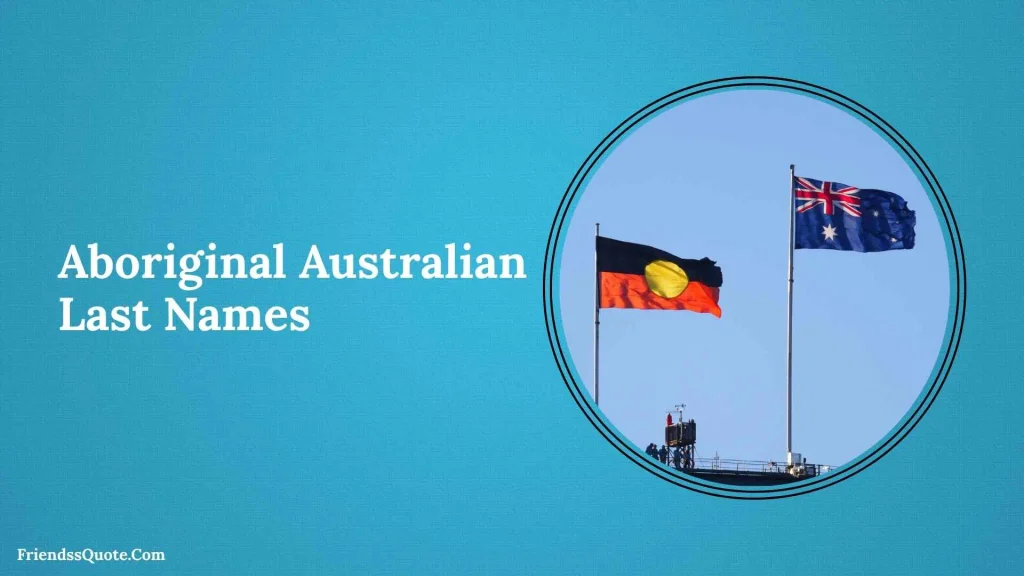
Aboriginal Australian surnames require a different approach from general surname lists. Indigenous naming histories are connected to specific peoples, languages, families, and historical circumstances. A surname may reflect Indigenous family history, European contact, an adopted name, or a combination of influences.
Understanding Indigenous Surname Histories
AIATSIS explains that Indigenous Australian ancestors may have been recorded under several names throughout their lives. Historical documents can include traditional names, European names, nicknames, and spelling variations. Some names were assigned or changed by employers, missionaries, or institutions.
This means you shouldn’t treat a list of surnames as a complete catalogue of Aboriginal Australian family names. Nor should you assume that a surname is exclusively Indigenous because a notable Aboriginal person carries it.
When researching a particular family, I recommend starting with the person’s known community, location, relatives, and historical records. Respect for community knowledge is especially important when information involves cultural identity or restricted family histories.
Documented Surnames of Notable Aboriginal Australians
The following examples are surnames associated with publicly known Aboriginal Australians. They illustrate the diversity of people and families in Australian public life; they are not a list of surnames that are exclusively Aboriginal in origin.
| Surname | Public association | Context |
| Yunupingu | Yothu Yindi musician and Indigenous rights advocate Dr. G. Yunupingu | Music and Indigenous advocacy |
| Namatjira | Artist Albert Namatjira | Australian art history |
| Perkins | Athlete and Indigenous rights activist Cathy Freeman is not a Perkins; Charles Perkins is a prominent historical example | Civil rights and public life |
| Mundine | Boxer and public figure Anthony Mundine | Sport and public life |
| Cox | Aboriginal activist and public figure Faith Bandler was born Faith Ida Lessing; Cox is associated with other Indigenous Australian public figures | Family-specific context should be verified |
These examples should be used carefully because public recognition does not establish a surname’s origin. For a more accurate family-history investigation, use sources tied to the individual and their community rather than inferring ancestry from the name alone.
The AIATSIS Aboriginal and Torres Strait Islander Biographical Index can be a useful starting point for researching people and historical references.
Famous Australian Last Names
Famous Australian last names are associated with people who have made a public impact in politics, sport, literature, science, business, music, and the arts. Some are connected to Australian history, while others became widely recognized through modern popular culture.
Surnames Associated With Australian History
| Surname | Notable association | Why it is recognized |
| Macarthur | John Macarthur | Colonial history and the wool industry |
| Wentworth | William Charles Wentworth | Exploration and Australian political history |
| Lawson | Henry Lawson | Australian literature |
| Paterson | Banjo Paterson | Poetry and bush ballads |
| Deakin | Alfred Deakin | Australian federation and politics |
| Curtin | John Curtin | Prime ministerial and wartime history |
| Dunlop | Edward Dunlop | Medicine and wartime service |
| Flynn | John Flynn | The Royal Flying Doctor Service and outback health care |
A famous surname may become familiar because of one notable individual. That doesn’t mean everyone sharing the surname belongs to the same family or has a connection to that person.
Famous Names From Arts, Sports, and Public Life
| Surname | Notable person | Field |
| Hemsworth | Chris Hemsworth | Film |
| Kidman | Nicole Kidman | Film |
| Jackman | Hugh Jackman | Film and theater |
| Sutherland | Mark Sutherland is not the intended celebrity association; actor Donald Sutherland was Canadian | Use individual-specific verification |
| Thorpe | Ian Thorpe | Swimming |
| Freeman | Cathy Freeman | Athletics |
| Laver | Rod Laver | Tennis |
| Goolagong | Evonne Goolagong Cawley | Tennis |
| Flack | Judith Flack is not the intended association; singer Judith Durham is a better-known Australian music figure | Music |
| Durham | Judith Durham | Music |
Fame is time-dependent, and public associations should be checked before publication. The strongest surname examples connect a clearly identified person with a verifiable Australian contribution.
Common Australian Last Names
Common Australian last names include many surnames with English, Scottish, Irish, and other European roots. However, a surname’s familiarity is not the same as a verified national popularity ranking.
If you want a recognizable Australian-style surname, the following names are useful starting points.
Familiar English and Scottish Surnames
| Surname | Origin | Meaning or background |
| Smith | English and Scottish | Metalworker |
| Jones | Welsh and English | Derived from the personal name John |
| Williams | Welsh and English | Derived from William |
| Brown | English and Scottish, among other origins | Originally associated with a brown color or complexion |
| Wilson | English and Scottish | Son of Will or William |
| Taylor | English and French-influenced | Tailor |
| Thomas | Welsh, English, and other origins | Derived from the personal name Thomas |
| White | English and Scottish | Often associated with a descriptive nickname |
| Walker | English and Scottish | Traditionally associated with a cloth-processing occupation |
| Harris | English and Welsh | Derived from Harry or Henry |
These surnames have long histories in English-speaking countries, including Australia. Their presence in Australia does not mean they originated there.
Irish and Other European Surname Traditions
Australian family names also reflect Irish and wider European migration.
- Murphy — Irish surname with a long history in Ireland.
- Kelly — Irish surname with established Gaelic roots.
- O’Connor — Irish surname derived from an older Gaelic family name.
- Ryan — Irish surname associated with the Gaelic name Ó Riain.
- Campbell — Scottish Gaelic surname.
- Fraser — Scottish surname with historical roots in Scotland.
- Bennett — English surname derived from a form of Benedict.
- Martin — A surname with several independent European origins.
- Rossi — Italian surname often associated with a red-haired or ruddy person.
- Müller — German surname meaning miller; spellings may vary in records.
For accurate Australian surname popularity figures, use a clearly identified official dataset or a reputable demographic source. I would not assign a current national rank without verified statistics.
Rare Australian Last Names
Rare Australian last names can be especially interesting when you want a distinctive family name for a story, a genealogy project, or a character. However, rarity depends on the population and records being examined.
A surname that is uncommon across Australia might be relatively familiar within a particular region or migrant community.
Distinctive and Less Familiar Surnames
The following names offer a mixture of distinctive sounds, historical associations, and less familiar forms. Their inclusion does not establish a measured frequency ranking.
| Surname | Origin or background | What makes it distinctive |
| Featherstone | English | Long, place-associated surname |
| Weatherby | English | Distinctive place-name form |
| Wainwright | English | Historically associated with wagon making |
| Pemberton | English | Established place-name surname |
| Chisholm | Scottish | Historic Scottish family name |
| Cuthbertson | Scottish and English | Patronymic form derived from Cuthbert |
| Ellwood | English | Short, place-associated surname |
| Fairbairn | Scottish | Distinctive Scottish family name |
| Hargreaves | English | Historic surname with regional roots |
| Kershaw | English | Surname with place-name associations |
| Lockwood | English | Place-associated surname |
| Weatherall | English | Less familiar to many readers than Smith or Taylor |
| Whitcombe | English | Distinctive place-name form |
| Ashworth | English | Historic surname associated with English places |
| Bellingham | English | Long-established place-name surname |
These are real surnames with established linguistic or historical backgrounds, but I have not verified their individual frequency in Australia’s population. To establish whether a surname is genuinely rare in Australia, consult suitable population records, electoral resources where legally accessible, or historical genealogy databases.
How to Verify Whether a Surname Is Rare
I recommend checking several sources rather than relying on a website that labels a name “rare.”
- Search historical Australian birth, marriage, and death indexes.
- Look for the surname in digitized newspapers and historical records.
- Compare spelling variants, including older forms.
- Check whether the surname is concentrated in a particular Australian state or community.
- Distinguish a small number of historical records from a reliable count of living people.
The National Library of Australia’s genealogy resources can help you trace people through historical records, especially when investigating early migration or convict ancestry.
Cool Australian Last Names
Cool Australian last names can be short, memorable, strong-sounding, or unusual without having an exaggerated or invented meaning. If you’re choosing a name for a fictional character, I suggest considering how it sounds with the character’s first name and how easy it is to pronounce.
Short and Memorable Surnames
| Surname | Background | Style |
| Hart | English and other origins | Short and strong |
| Lane | English and Irish among other origins | Simple and modern |
| Reid | Scottish and English | Crisp and traditional |
| Blake | English and Irish among other origins | Bold and familiar |
| Flynn | Irish | Compact and distinctive |
| Nash | English | Short and memorable |
| Frost | English | Sharp and dramatic |
| Shaw | English and Scottish | Clean and understated |
| West | English | Direct and modern |
| Stone | English | Solid and recognizable |
These names can work well in fiction, gaming, or creative projects. Their meanings and histories vary, and some have more than one origin.
Strong-Sounding Surnames for Characters
If you want a name that feels bold or commanding, consider Armstrong, Blackwood, Cross, Hunter, Marshall, Sterling, Strong, or Thornton.
For example, I might choose Blackwood for a mysterious character, Sterling for a polished business executive, or Hunter for an adventurous protagonist. Those are creative associations, not claims about the historical meanings of every name.
If Australian authenticity matters to you, match the surname to the character’s family background, location, and generation rather than assuming a particular sound is uniquely Australian.
Old Australian Last Names
Old Australian last names are surnames documented in earlier periods of Australian history. Some entered Australia with the first British settlements, while others arrived through later migration. The age of a surname itself is different from the date when a particular family first used it in Australia.
Surnames Found in Early Colonial Records
Several surnames are associated with notable people in Australia’s colonial and early national history.
| Surname | Historical association |
| Macarthur | John Macarthur and colonial pastoral history |
| Wentworth | William Charles Wentworth and early Australian politics |
| Blaxland | Gregory Blaxland and early inland exploration |
| Lawson | Henry Lawson and Australian literature |
| Paterson | Banjo Paterson and Australian poetry |
| Macquarie | Lachlan Macquarie and colonial administration |
| Hume | Hamilton Hume and Australian exploration |
| Oxley | John Oxley and early surveying |
| King | Philip Gidley King and colonial administration |
| Franklin | John Franklin, who served as lieutenant-governor of Van Diemen’s Land |
These names are associated with specific historical figures. They should not be treated as proof that every Australian family with one of these surnames descends from the person mentioned.
Researching Historical Australian Families
If you’re tracing an old Australian family name, start with the earliest confirmed relative rather than assuming that the surname alone reveals the family’s history.
The National Library of Australia recommends examining transportation registers and related records when researching possible convict ancestors. These documents can include names, aliases, ships, dates, and other details useful for reconstructing a family timeline.
I recommend keeping a record of each spelling variation you encounter. A surname might appear differently in a baptism record, marriage certificate, newspaper, or passenger list. Matching several independent details is more reliable than relying on a name alone.
Traditional Australian Last Names
Traditional Australian last names are not limited to one original culture. Australia’s family-name traditions have been shaped by British and Irish settlement, migration from many parts of the world, and the distinct naming practices of Aboriginal and Torres Strait Islander peoples.
British and Irish Naming Influences
Many surnames that feel traditional in Australia have British or Irish linguistic roots.
Examples include:
- Anderson — A patronymic surname associated with Andrew.
- Bennett — Derived from the medieval personal name Benedict.
- Campbell — A Scottish Gaelic surname.
- Clarke — An occupational surname associated with a clerk or literate person.
- Fletcher — An English occupational surname.
- Hamilton — A surname with Scottish and place-name associations.
- Hughes — A Welsh and English surname derived from a personal name.
- Lawson — A patronymic surname associated with Lawrence.
- Richardson — A patronymic surname derived from Richard.
- Thompson — A patronymic surname meaning son of Thomas.
These examples represent only part of Australia’s surname history. Families from other regions have also established long-standing Australian lineages.
Australian Family Names Across Generations
A traditional surname can remain in a family for generations, but the spelling or form may change through marriage, adoption, migration, or personal choice.
Indigenous Australian genealogy presents additional complexities. AIATSIS notes that ancestors may have been known by different names throughout their lives, and official records may contain spelling differences or names assigned by other people.
When you research a traditional family name, look for records connecting actual relatives. A familiar surname does not automatically establish a shared family line, cultural identity, or place of origin.
Australian Last Names Starting With C
Australian last names beginning with C include familiar surnames, historical family names, and less common choices. The following examples can help you find a name based on its first letter.
Common Surnames Beginning With C
| Surname | Origin | Meaning or background |
| Campbell | Scottish Gaelic | Historic Scottish surname |
| Clark | English and Scottish | Occupational surname associated with a clerk |
| Clarke | English and Irish | Variant spelling of Clark in some family histories |
| Collins | Irish and English among other origins | Has multiple surname origins |
| Cook | English | Occupational surname associated with cooking |
| Cooper | English | Maker or repairer of barrels |
| Cox | English and Welsh among other origins | Surname with several possible historical origins |
| Crawford | Scottish and English | Place-name surname |
| Chapman | English | Occupational surname associated with a merchant or trader |
| Cameron | Scottish Gaelic | Traditional Scottish family name |
| Cunningham | Scottish and Irish contexts | Historic surname with place-name associations |
| Curtis | English and French-influenced | Derived from a term associated with courteous behavior |
| Connolly | Irish | Anglicized form of an Irish surname |
| Carroll | Irish and English among other origins | Multiple historical origins |
| Chambers | English and French-influenced | Occupational or status-related surname |
| Chisholm | Scottish | Historic Scottish family name |
| Christie | Scottish and English | Often derived from the personal name Christian |
| Clayton | English | Place-name surname |
| Cross | English | Surname with geographical and other possible origins |
| Connelly | Irish | Alternative spelling associated with Connolly in some families |
Some of these surnames are familiar in Australia because of migration and long-standing English-speaking naming traditions. Others are distinctive choices for people searching for a particular sound or spelling.
Distinctive Surnames Beginning With C
If you’re searching for a more distinctive surname beginning with C, consider Cuthbertson, Chisholm, Cunningham, Clearwater, Carstairs, or Calderwood.
Their suitability depends on your purpose. A family-history project requires evidence connecting the name to your ancestors, while a fictional character can use a surname chosen for its sound, style, or cultural background.
Don’t assume that a surname beginning with C is Australian in origin simply because it appears in Australian records.
How to Research an Australian Family Name
Finding the history of an Australian surname takes more than looking up a meaning. The most useful approach combines historical records, spelling variants, and evidence about specific relatives.
Start With What You Know
Write down your relative’s full name, approximate birth year, known locations, spouse, and parents. Even one additional detail can help distinguish people who share the same surname.
Search Reliable Historical Records
The National Library of Australia offers family-history guidance and information about historical migration and convict records. AIATSIS provides resources for researching Aboriginal and Torres Strait Islander family histories.
Use the records that match your research question. A passenger list may help establish migration, while a marriage record may provide information about relatives or a surname change.
Check Alternative Spellings
Names were sometimes recorded according to how they sounded. Handwriting, transcription, marriage, and transliteration can also introduce differences.
For example, if a record doesn’t appear under one spelling, try a known variant or search for part of the name. The NSW Government’s guidance on researching Aboriginal family history specifically recommends considering spelling differences and alternative search forms.
Separate Evidence From Assumptions
A surname dictionary can suggest a possible linguistic origin, but it cannot independently prove your ancestry.
Compare records, note conflicting details, and distinguish documented family connections from possibilities. If a surname has multiple origins, keep those interpretations separate until evidence supports one for your particular family.
Frequently Asked Questions
What are some unique Australian last names?
Distinctive surnames found in Australian family histories include Chisholm, Fairbairn, Featherstone, Pemberton, Wentworth, Wainwright, and Whitcombe. Their presence in Australia does not necessarily mean they originated there.
What are the most common Australian surnames?
Smith, Jones, Williams, Brown, Wilson, Taylor, and other British-origin surnames are familiar in Australia. However, an accurate national ranking should be based on a specified Australian dataset and reference year rather than an unverified online list.
Do Australian last names have Australian origins?
Some surnames are associated with Australian history, but many developed in Britain, Ireland, Europe, or other regions before families migrated to Australia. A surname’s history in Australia and its original linguistic origin are two different things.
What are some Aboriginal Australian surnames?
There is no single list that represents all Aboriginal Australian surnames. Indigenous naming histories vary by community and family, and some surnames reflect European contact or historical administrative practices. Research individual names through appropriate historical and community sources.
How can I find the meaning of an Australian surname?
Start with a reputable surname dictionary or linguistic reference. Then compare the proposed meaning with historical spellings, geographical origins, and family records. Remember that the same surname can have more than one independent origin.
How can I tell whether an Australian surname is rare?
Check historical records and suitable population datasets, paying attention to the year, geographic coverage, and spelling variants. Without reliable frequency data, describe a name as distinctive or less familiar rather than claiming it is statistically rare.
Conclusion
Unique Australian last names reflect the country’s complex history, from British and Irish settlement to later migration and the diverse naming traditions of Aboriginal and Torres Strait Islander peoples. If you prefer a traditional surname such as Campbell, an elegant choice such as Wentworth, or a distinctive name such as Fairbairn, the most useful choice depends on what you’re looking for.
If you’re researching your own family, I recommend beginning with verified relatives and historical records instead of relying on a surname’s meaning alone. If you’re choosing a name for a character or creative project, consider its sound, background, spelling, and cultural context. Understanding those differences helps you choose a surname that is memorable without confusing its modern use with its documented history.

Patrick Collins is a writer with a passion for meaningful words and timeless quotes that inspire everyday life. He enjoys exploring themes of motivation, relationships, success, and personal growth through simple, relatable writing. Patrick is also the fictional author of Echoes of Quiet Courage and Where Hope Finds Its Voice, two original book concepts created for his author profile. When he’s not writing, he enjoys reading classic literature, traveling, and collecting memorable quotes. His goal is to share words that encourage, uplift, and leave a lasting impression.
 Brianna Lewis
 Kai Mercer